Cash Flow Glossary: Terms Every Business Owner Should Know

Most financial glossaries are written by accountants, for accountants. This one is a reference hub for founders, freelancers, solopreneurs, and small-business owners who need to understand what is happening with their cash today: what actually hits the bank account, when it hits, and what balance is left after every outflow.
Cash Flow Basics
Cash Flow / Net Cash Flow
Net cash flow is the difference between total cash inflows and total cash outflows over a period. If $4,500 came into your business last month and $3,800 went out, your net cash flow was +$700. A positive number means your business generated cash. A negative number means it consumed cash, and you need to know exactly why before the next cycle begins.
Net cash flow shows how cash changed over a period, such as a week, month, or quarter. Cash balance shows how much cash you have at a specific moment.
Cash Inflow / Cash Outflow
Cash inflow is money that enters your business bank account. Cash outflow is money that leaves it. Inflows include customer payments, loan proceeds, owner contributions, and refunds. Outflows include payroll, rent, inventory purchases, taxes, and loan repayments. Accrual accounting records revenue when it is earned and expenses when they are incurred, even if cash has not moved yet, but cash flow only recognizes the event when the money actually hits or leaves your account.
In other words: an invoice is not a cash inflow, and a sale is not cash until the payment clears and settles.
Owner Draw / Owner Pay
An owner draw is money an owner takes out of the business for personal use, usually from owner equity rather than payroll. Owner pay is the broader operating term for the owner's compensation, whether it shows up as draws, salary, guaranteed payments, or distributions, depending on the business structure.
Owner tip: Treat owner pay as a scheduled cash outflow, not as whatever happens to be left in the account.
Cash Basis Accounting vs. Accrual Accounting
Cash basis accounting records income when cash is received and expenses when cash is paid. Accrual accounting records income when it is earned and expenses when they are incurred, even if cash has not moved yet.
For external financial reporting, businesses typically present results on an accrual basis. For liquidity planning, the question that matters is still cash timing.
This is why a business can look profitable while cash is tied up in accounts receivable, prepaid expenses, or inventory.
Owner tip: Even if your books are accrual-based, your cash flow forecast is always cash basis. Cash survival is always cash basis.
Commingled Funds / Commingling
Commingling means using the same account, card, or transaction trail for personal and business money. It blurs what cash actually belongs to operations, what counts as owner pay, and what should have been reserved for taxes.
Owner tip: If your forecast starts from a mixed account, the number may be mathematically correct but operationally useless.
Cash Balance (Opening / Closing)
Cash balance is the amount of cash your business has available at the beginning or end of a period. Ending Cash = Beginning Cash + Net Cash Flow. The closing balance of one period becomes the opening balance of the next. This simple chain is the backbone of every financial projection. Get the starting balance wrong once, and every future calculation breaks.
Owner tip: Use the balance you can actually spend, meaning the available bank balance, not just the "cash and cash equivalents" number in your accounting software.
Cleared Cash / Settled Cash
Cleared cash is money that has cleared bank holds. Settled cash is money that has completed the processor or banking cycle and is available to spend or pay out. In cash planning, both terms point to money you can actually use.
Owner tip: Start every forecast from cleared cash, not from optimistic balances that include money still on hold or on the way.
Cash Equivalents (Cash and Cash Equivalents)
Cash equivalents are short-term, highly liquid assets that can quickly be turned into cash with little risk of losing value. Under IAS 7, the IFRS cash flow standard, they typically have original maturities of three months or less. That three-month test refers to original maturity at acquisition, not simply time remaining today.
In financial statements, they are typically reported together with cash as cash and cash equivalents.
Common examples include Treasury bills, money market funds, and short-term bank deposits. Not cash equivalents: inventory, accounts receivable, long-term investments, or anything you cannot turn into cash on demand without meaningful price risk.
Owner tip: In a cash flow forecast, treat an equivalent as cash only if you can liquidate it and settle it inside your forecast horizon, and without penalties. Otherwise, model it as a separate reserve line item.
Cash Buffer
A cash buffer is the reserve cash kept in your accounts specifically to absorb unexpected shocks: a sudden drop in sales, a delayed payment from a major client, or an emergency repair. It is the financial equivalent of an airbag.
Some teams use labels like minimum cash threshold or safety floor for the protected cash level they do not want the forecast to cross.
Owner tip: Treat your buffer as untouchable and track it separately so it does not get spent by accident.
Tax Reserve / Sinking Fund
A tax reserve is cash intentionally set aside for a future tax bill. A sinking fund is the broader practice of setting money aside over time for any known future obligation. In cash planning, a tax reserve is one common type of sinking fund.
Owner tip: Move tax money out of your day-to-day operating account as soon as cash clears, or it will almost always look available when it is not.
Liquidity
Liquidity is how quickly an asset can be turned into available cash without a major loss in value. Cash in a checking account is highly liquid. A warehouse full of custom machinery is highly illiquid.
In practice, liquidity is also about settlement timing: money sitting in payment processors and marketplace payouts is not fully liquid until it reaches your bank account.
In financial reporting, this is why cash and cash equivalents are treated as a separate category.
Positive vs. Negative Cash Flow
Positive cash flow means inflows exceed outflows. Negative cash flow means outflows exceed inflows. Negative cash flow is not automatically a crisis. A company investing heavily in a new product line may run negative intentionally. However, sustained or unexplained negative cash flow demands a clear explanation and a realistic plan for recovery.
Forecasting and Planning Terms
Cash Flow Forecast / Cash Flow Projection
A cash flow forecast estimates future cash inflows, cash outflows, and ending cash balances over a specific horizon. It helps you spot a cash shortfall before it happens. Standard horizons are weekly, 13-week, monthly, and 12-month. For short-term liquidity management, many founders rely on a rolling 13-week forecast, roughly one financial quarter, because it provides enough runway to change course if trouble is brewing.
If you want the conceptual overview, read What Is a Cash Flow Forecast? Methods, Models, and Mistakes to Avoid. If you want the hands-on build, use 13-Week Cash Flow Forecast: Spreadsheet Template & Step-by-Step Guide.
Owner tip: A forecast is a list of dated cash movements, not a guess at monthly totals.
Headroom
Headroom is the amount of projected cash you have above your minimum required cash level. In cash planning, headroom = projected ending cash - minimum required cash.
Owner tip: Positive headroom means you still have room to absorb surprises. Negative headroom means the forecast is already telling you where the problem lands.
Safe-to-Spend
Safe-to-spend is a planning number: the amount of cash you can use now without creating a later shortfall. In practice, it usually starts with cleared cash and subtracts near-term obligations, tax funding gaps, and your protected buffer.
Owner tip: Safe-to-spend is not the same as today's bank balance. It is the part of that balance that remains after survival is funded.
Budget vs. Forecast
A budget is a forward-looking operating plan for a future period, often a year. A forecast is an updated estimate of what is likely to happen based on current information. Many businesses set a budget annually and refresh forecasts monthly or weekly depending on cash volatility, reporting cadence, and decision needs.
Cash Runway
Cash runway is how long a business can keep operating before it runs out of cash. For a business with persistent negative cash flow, runway is often estimated as Current Cash / Average Monthly Net Burn. It answers the most urgent question a founder can face: "How many months until we run out of money?" For businesses with steady burn, runway below three months often signals elevated risk, but the right threshold depends on volatility, seasonality, financing access, and how quickly costs can be reduced.
This shortcut breaks down when burn is volatile, seasonal, or already near zero or positive. In those cases, a rolling cash forecast is a better way to estimate when cash could hit your minimum threshold, if it does at all.
Burn Rate (Gross Burn vs. Net Burn)
Burn rate is how fast your business uses cash each period. Gross burn equals your total cash outflows. Net burn equals total cash outflows minus total cash inflows. The distinction matters. A business with $50,000 in monthly expenses and $45,000 in monthly revenue has a gross burn of $50,000, but a net burn of only $5,000. Track both to understand your true risk.
Owner tip: For consistently cash-burning businesses, use average net burn to estimate runway. Use gross burn to keep spending honest.
Scenario Planning (Best / Base / Worst Case)
Scenario planning means building multiple versions of your forecast using different assumptions: collections speed, sales volume, and one-time costs. You should maintain at least three versions: best case, base case, and worst case. The point is not to predict the future perfectly; it is to know in advance exactly what levers you will pull if the worst case arrives.
| Forecast horizon | Best use | Typical cadence |
|---|---|---|
| Weekly / rolling 13-week | Short-term liquidity control | Updated weekly |
| Monthly / 12-month | Budgeting, seasonality, and annual planning | Updated monthly |
| Quarterly / multi-year | Strategic growth and financing decisions | Updated periodically |
Cash Trough
A cash trough is the lowest projected cash balance in your forecast horizon. It is the week, or date, where timing pressure is highest and where a delayed payment or surprise outflow hurts the most.
Owner tip: Your forecast does not need to predict every week perfectly. It does need to show you where the trough is before you arrive there.
Working Capital and Timing Terms
Working Capital (Net Working Capital)
Working capital is the difference between current assets and current liabilities. It measures whether your business can cover short-term obligations with short-term resources. Both are balance sheet categories, discussed further in Balance Sheet below. High accounts receivable and large inventory balances look like assets on paper, but they still tie up cash. Low accounts payable means you are paying suppliers faster than customers are paying you. That timing gap creates cash flow problems.
Owner tip: If revenue is growing but your bank balance is shrinking, working capital is often the reason.
Accounts Receivable (AR) / Accounts Payable (AP)
Accounts Receivable (AR) is money your customers owe you. Accounts Payable (AP) is money you owe your suppliers. The timing gap between collecting AR and paying AP is a primary source of cash flow stress, especially when your suppliers demand payment in 30 days, but your clients take 60.
Owner tip: If one or two customers make up most of your AR, one late payment can create an outsized cash crunch. Model that risk explicitly.
Inventory
Inventory is the stock a business buys or produces to sell later, including finished goods, raw materials, and work-in-progress. On paper, inventory is an asset. In cash terms, it is money tied up in stock until the goods are sold and paid for.
Inventory is one of the biggest cash traps because you pay for it before you sell it, and you often sell before you collect the cash if customers pay on terms. Slow-moving inventory pushes DIO up and lengthens your Cash Conversion Cycle.
Owner tip: Track inventory aging, meaning what has not moved in 30, 60, or 90+ days. Dead stock is not an asset; it is tied-up cash. Buy based on demand and lead times, not optimism.
Payment Terms (Net 30 / 60 / 90)
Payment terms define how many days a customer has to pay an invoice. Net 30 means payment is due within 30 days. The catch: your forecast must rely on actual payment behavior, not contractual terms. If your Net 30 customers consistently pay on day 45, build your forecast around day 45.
Due on receipt means payment is expected as soon as the customer receives the invoice. An upfront deposit collects part of the cash before work begins, and milestone billing ties invoices to defined stages or deliverables so you do not finance the whole project until the end.
If you need follow-up cadence, late-fee language, or collections escalation, use Cash Flow for Freelancers.
Owner tip: Track actual days-to-pay by customer. Your forecast should reflect reality, not what the invoice says.
Marketplace Payout Lag / Settlement Lag
Settlement lag is the delay between a sale or successful charge and the moment the funds become available in your processor or marketplace balance. Marketplace payout lag is the extra delay before those funds reach your bank account. In cash planning, both matter more than the sale date.
Owner tip: Forecast payout dates, not order dates, or your model will overstate near-term cash.
Returns Reserve
In cash planning, a returns reserve is cash held back by a platform, or deliberately set aside by you, to cover expected refunds, returns, and chargebacks. It reduces how much of today's sales you should treat as spendable cash.
Owner tip: Gross sales are not usable cash if a predictable share will reverse later through refunds or disputes.
Cash Conversion Cycle (CCC)
Cash conversion cycle (CCC) is the number of days it takes for cash spent on operations to return to your business. The formula is CCC = DIO + DSO - DPO. Example: If your inventory sits for 61 days (DIO), customers take 58 days to pay (DSO), and you pay suppliers after 49 days (DPO), your CCC = 61 + 58 - 49 = 70 days.
That is 70 days when your cash is tied up in operations. Shortening the CCC directly improves your liquidity. Edge case: Service businesses taking upfront subscriptions often have a negative CCC, meaning they get paid before delivering the service, which is a highly advantageous cash position.
Owner tip: You do not need a perfect CCC calculation to act. Small improvements in collections speed, inventory turns, or supplier terms often unlock cash fast.
DSO / DPO / DIO
Three metrics that break down the Cash Conversion Cycle:
-
DSO (Days Sales Outstanding): How many days, on average, it takes to collect payment. High DSO means cash is tied up in invoices.
-
DPO (Days Payable Outstanding): How many days, on average, before you pay suppliers. Higher DPO means you keep cash longer.
-
DIO (Days Inventory Outstanding): How many days, on average, inventory sits before it sells. High DIO means cash is locked in stock.
Financial Statement Vocabulary
Income Statement (P&L)
An income statement, also called a Profit and Loss statement (P&L), summarizes performance over a period: revenue, expenses, and profit (net income). It answers: "Did the business make money on paper this month, quarter, or year?"
The key limitation: a P&L does not show cash timing. Under accrual accounting, it can include revenue you have not collected yet and expenses you have not paid yet. That is why founders can feel profitable and still be broke.
Owner tip: When your P&L looks strong but cash is tight, go straight to AR, inventory, and short-term debt. The problem is usually sitting on the balance sheet, not the P&L.
Balance Sheet (Current Assets / Current Liabilities)
A balance sheet is a snapshot of what your business owns and owes at a specific point in time. It is where cash, accounts receivable, inventory, debt, and payables live.
-
Current Assets: Assets expected to turn into cash within roughly 12 months, including cash and cash equivalents, accounts receivable, inventory, and prepaid expenses.
-
Current Liabilities: Obligations due within roughly 12 months, including accounts payable, taxes payable, credit card balances, and short-term loan principal.
Owner tip: A cash crunch often shows up first as AR and inventory rising faster than cash. Watch the direction of the current accounts, not just the totals.
Statement of Cash Flows
The statement of cash flows is a financial report that shows where cash came from and where it went during a period. It has three sections: Operating, Investing, and Financing.
It is backward-looking: it tells you what happened. A forecast is forward-looking: it helps you see what is likely to happen next.
Under US GAAP, the direct method is encouraged for the operating section, though the indirect method is more common in practice. Under IFRS, IAS 7 also permits either the direct or indirect method while using the same operating, investing, and financing structure. See Deloitte ASC 230 and BDO Blueprint on ASC 230.
Operating Cash Flow (OCF) / Cash Flow from Operations (CFO)
Operating cash flow is the cash your core business operations generate, or consume, over a period. In the statement of cash flows, it appears in the Operating section, often labeled Cash Flow from Operations (CFO).
This is the cash engine of your business: cash collected from customers minus cash paid for operating costs, adjusted for working-capital timing, such as AR, inventory, AP, and non-cash items.
Owner tip: If your business looks profitable but operating cash flow is negative, do not hand-wave it. Something in your timing is broken: slow collections, overbuying inventory, paying suppliers too fast, or front-loading expenses.
Cash Flow from Investing (CFI)
Cash flow from investing is cash used for, or generated by, buying and selling long-term assets and investments. For most small businesses, the main item is CapEx: equipment, vehicles, property improvements, and other big purchases that keep the business running.
Growing businesses often show negative CFI because they are investing in capacity.
Owner tip: Treat CapEx as a dated cash event in your forecast. A one-time $12,000 equipment purchase can create a shortfall even when monthly profit looks fine.
Cash Flow from Financing (CFF)
Cash flow from financing tracks cash moving between your business and its owners and lenders: borrowing money, repaying loan principal, owner contributions, and owner distributions.
Financing cash flow can keep you alive during a rough patch, but it can also hide a weak core business. A month with positive net cash flow can still be unhealthy if CFO is negative and the fix is more debt.
Owner tip: Separate cash from operations from cash from financing in your thinking. If you need new borrowing every month to cover routine expenses, it is not a bridge; it is a structural problem.
Direct Method vs. Indirect Method
-
Direct Method: Lists every actual cash receipt and payment line by line. It is the most transparent view of cash movement.
-
Indirect Method: Starts with Net Income and works backward, adjusting for non-cash items, like depreciation, and changes in working capital to arrive at actual cash flow. The final number is the same; only the path differs.
Net Income (Profit)
Net Income is your total revenue minus all expenses, taxes, and costs. It is the bottom line of the income statement. However, because of accrual accounting, Net Income includes revenue you have not yet collected and deducts expenses you have not yet paid. It is a measure of profitability, not liquidity.
Non-Cash Items (Depreciation, Amortization)
Non-cash items are expenses that reduce your reported accounting profit without touching your bank account. For example: a $36,000 truck depreciated over 36 months generates $1,000 in monthly book depreciation expense. That $1,000 lowers accounting profit each month, but no cash leaves your account at that point.
Note: book depreciation and tax depreciation do not always follow the same schedule, and tax treatment varies by jurisdiction.
Advanced Metrics
Free Cash Flow (FCF)
Free cash flow (FCF) is the cash left after a business covers capital expenditures. FCF = Operating Cash Flow - Capital Expenditures (CapEx). It is cash that may be available to pay down debt, distribute to owners, or reinvest in growth. Strong, durable FCF is often a useful signal of financial resilience, but it should be read alongside leverage, working-capital needs, and reinvestment demands.
Note: In corporate finance, this is often split into FCFF for all investors and FCFE for equity holders, but for small-business owners, standard FCF is the metric that matters.
Owner tip: If your business is not capital-intensive, your biggest CapEx might be occasional equipment purchases. The timing still matters for your forecast.
Capital Expenditures (CapEx) / Operating Expenses (OpEx)
CapEx is spending on long-term assets: equipment, property, and vehicles. OpEx is the day-to-day cost of running the business: salaries, rent, and subscriptions. CapEx reduces Free Cash Flow and appears in the Investing section of the cash flow statement, while OpEx flows through Operating activities.
EBITDA vs. Cash Flow
EBITDA is a profitability metric, not a cash flow metric. The term means Earnings Before Interest, Taxes, Depreciation, and Amortization. EBITDA excludes CapEx, working-capital changes, and actual tax payments. A business can boast strong EBITDA and still run out of money. Use EBITDA to benchmark performance; use cash flow to manage survival.
Problem and Red-Flag Terms
Cash Shortfall / Liquidity Crunch
A cash shortfall happens when your outflows exceed the cash you have available. Common causes include slow collections, unexpected emergency expenses, or seasonal dips. The businesses that survive shortfalls are the ones that saw them coming three weeks out with a forecast, not three days out.
If the shortfall is already immediate rather than projected, use the emergency sections in Cash Flow Forecasting for Small Businesses or Cash Flow for Freelancers.
Owner tip: Treat the first negative week in your forecast as a decision deadline, not a surprise.
Overtrading
Overtrading happens when sales grow faster than the business can fund the working capital needed to support that growth. Sales are rising, the team is busy, orders keep coming in, and suddenly you cannot make payroll because cash is tied up in new inventory and unpaid invoices. It can happen fast, but disciplined forecasting and working-capital control make it easier to spot and address early.
It often shows up first as rising receivables and inventory while your cash balance shrinks.
Bad Debt / Aged Debt
Bad debt is a receivable you have accepted you will never collect. Aged debt is an invoice that is past due: 30, 60, or 90+ days. Both erode your cash position silently. A regular review of your AR aging report is one of the simplest cash management habits you can build.
In forecasts, treat aged receivables as uncertain cash, not guaranteed cash.
AR Aging Report
An AR aging report is a breakdown of your open invoices by how long they have been outstanding: typically Current, 1-30 days, 31-60, 61-90, and 90+.
It is a practical, founder-friendly way to answer: "How much of my Accounts Receivable is likely to turn into cash soon, and how much is becoming a collections problem?" As invoices age, the probability of collection usually drops.
Owner tip: Review AR aging weekly. If a customer is consistently late, tighten terms, require partial upfront payment, or escalate collections in line with your contract, service model, and local law. If your agreement gives you that right, you may pause new work or deliveries until the balance issue is addressed. Your forecast is only as reliable as your collections.
Overdraft / Revolving Credit / Covenant
-
Overdraft: A bank facility allowing your account to go negative up to a set limit. Useful for short-term gaps; toxic if used as a permanent crutch.
-
Revolving Credit: A pre-approved borrowing facility you can draw from and repay repeatedly.
-
Covenant: A strict condition attached to a commercial loan, for example, "maintain a minimum debt-service coverage ratio (DSCR) above 1.20x" or "keep leverage below X." Break a covenant, and the lender may demand immediate repayment. Know your covenants.
Owner tip: If you need overdraft or credit every month to cover routine expenses, it is not a bridge. It is a structural cash flow problem.
Cash Flow vs. Profit vs. Revenue: The Critical Difference
Confusing these three numbers is one of the most expensive mistakes a founder can make.
Revenue is the total value of sales. Profit is revenue minus expenses. Cash flow is the actual movement of money into and out of the business.
Accrual accounting records revenue when it is earned, even if cash has not been received yet. Cash basis accounting records revenue only when cash is received. The result: a business can show a healthy profit while its bank account is empty.
Example: A company recognizes $10,000 in revenue and $5,000 in expenses. That is a $5,000 profit on paper. But if only $5,000 of that revenue has actually been collected, and the $5,000 in expenses has already been paid to suppliers, the actual net cash flow is $0. Profitable. Cash-neutral. One delayed payment away from a crisis.
| Metric | What It Measures | Where It Appears | Example |
|---|---|---|---|
| Revenue | Total value of sales generated. | Income Statement (P&L) | Invoicing $100,000 with no payments received yet. |
| Profit | Revenue minus all expenses. | Income Statement (P&L) | Recording $20,000 profit while $30,000 is locked in inventory. |
| Cash Flow | Actual movement of money. | Statement of Cash Flows | Collecting $50,000 in cash. |
Put These Terms to Work
- If you need the definition and basic model, read What Is a Cash Flow Forecast?.
- If you need the working spreadsheet structure, use 13-Week Cash Flow Forecast.
- If you need a small-business operating playbook, use Cash Flow Forecasting for Small Businesses.
- If you need a solo money system, use Cash Flow for Solopreneurs.
- If you need collections and invoice timing help, use Cash Flow for Freelancers.
This content is for informational purposes only and does not constitute financial, tax, or investment advice. Consult a qualified professional for guidance specific to your situation.
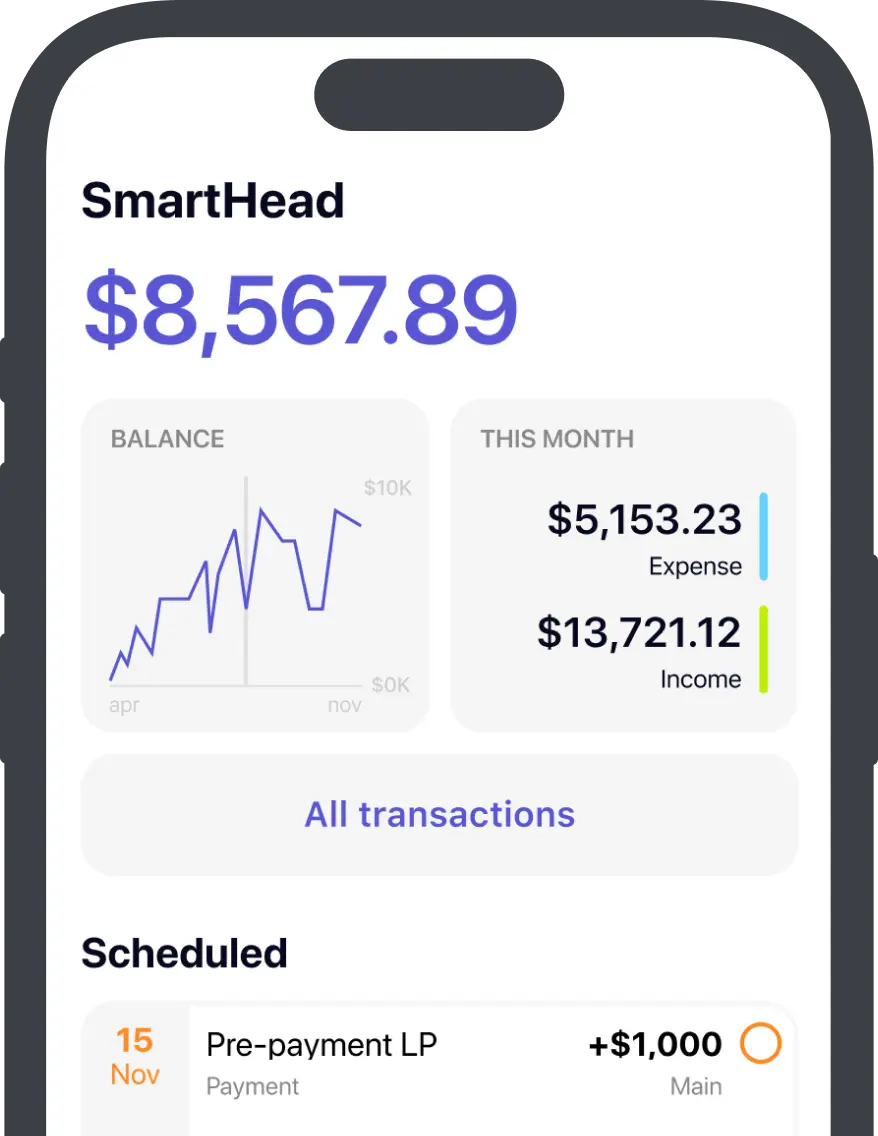
Cash flow tracking & future balance forecast with offline-first sync.
Get Started with onbalance